Maria Tallchief Quarter: Mint Marks, Grades, and Market Prices
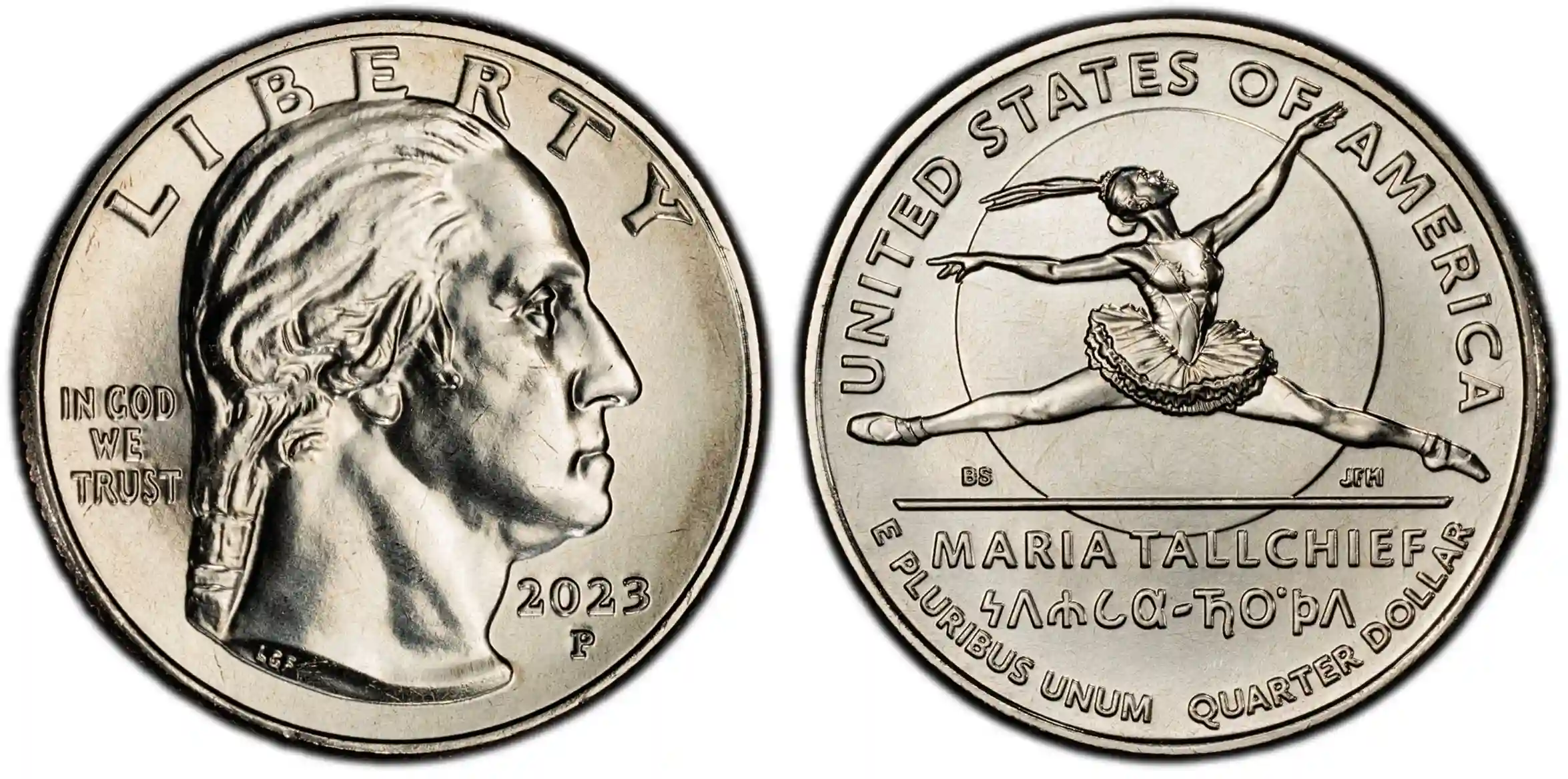
Today, millions of these commemorative Philadelphia/Denver/San Francisco quarters circulate nationwide, leading many casual finders to wonder about the true Maria Tallchief quarter value, because the circulated price starts from $0.25 and reaches $800 or more for high MS items with errors.
Mint Marks of the Maria Tallchief Quarter
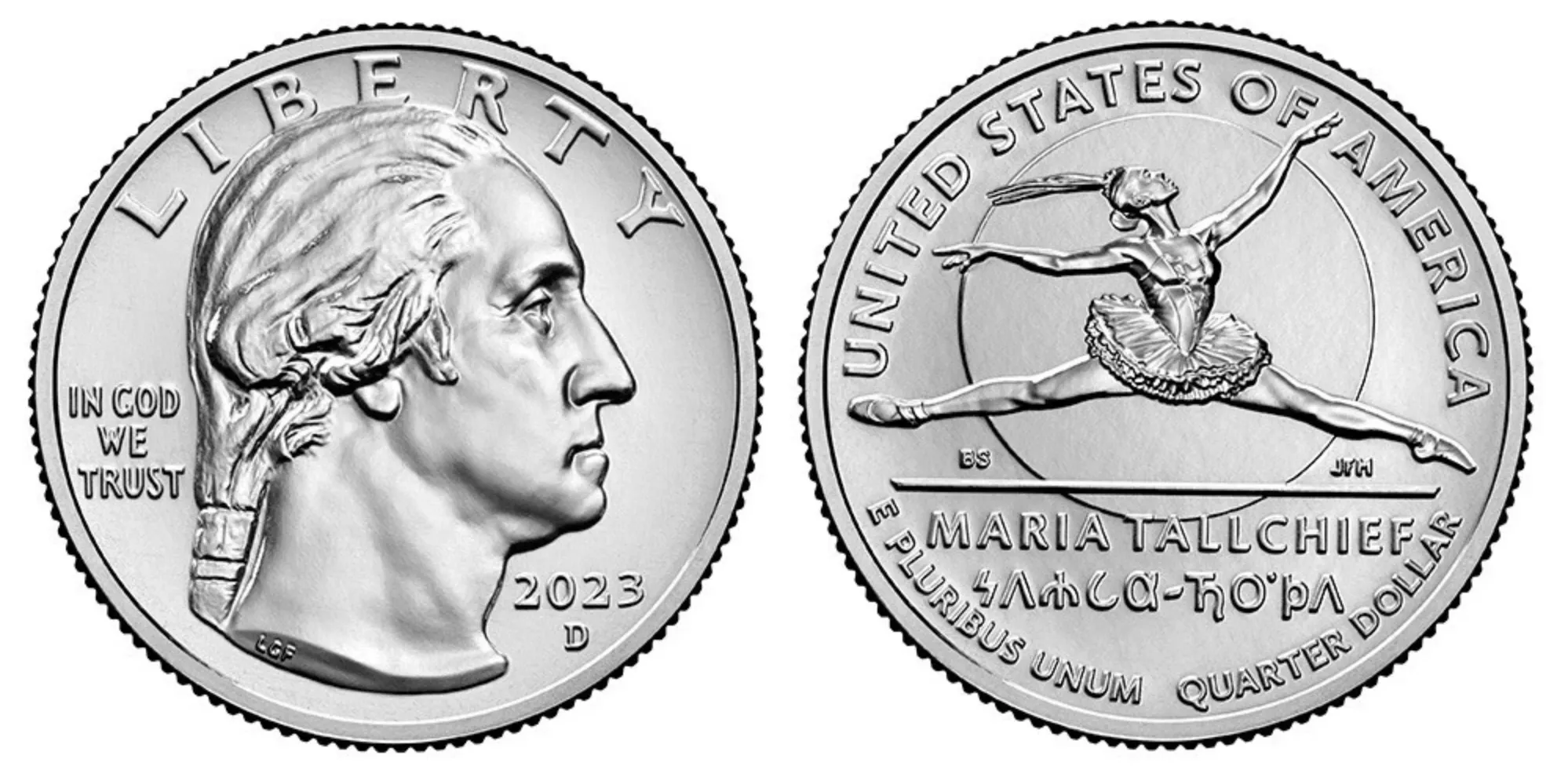
The Maria Tallchief quarter mint mark location is on the obverse of the coin. Look for George Washington's portrait, directly below the national motto.
Philadelphia Issue
Mintage –185,800,000
Millions of these P mint mark coins left the facility in 2023 to supply commercial banks along the East Coast. Because there are a lot of pieces, any P quarter pulled from daily issues that show signs of wear holds no added bonuses.
Denver Issue
Mintage – 184,800,000
The Denver Mint produced the coins, with daily commerce throughout the Midwest and the West Coast. Because their survival rates are so similar, retail coin dealers often package raw Philadelphia and Denver specimens together as a matched pair for collectors looking to complete simple year sets.
San Francisco Issue
Mintage – 502,560
The San Francisco facility struck these coins in limited quantities exclusively for the collector market. These special runs fall into two distinct categories:
Business Strikes
Proof Versions
Item Characteristics
To determine a coin, you should look closely at its physical characteristics. Production origins and striking sharpness are important in setting its value.
Year | 2023 |
Diameter | 24.26 mm |
Weight | 5.67 g |
Edge | Plain |
Metal | Copper / Nickel |
Grading the Maria Tallchief Quarter: Condition Tiers Explained
After mint mark identification, you should evaluate the coin's physical condition. Professional numismatists use the Sheldon grading scale. On modern copper-nickel clad coins, high-speed machinery handling creates fine scratches and contact marks as the coins drop into large storage bins.
Item Difference: Is Your Item Circulated?
A coin is considered circulated if it has even the slightest trace of wear from public handling. This friction quickly dulls the high points of the design, such as Washington's cheekbone on the obverse or the fine details of the ballerina's dress on the reverse.
MS-66 & MS-67 Issues
To earn an MS-67 Maria Tallchief quarter grade from an independent certification service such as PCGS or NGC. Any remaining contact marks from production must be microscopic and located away from major focal points, such as Washington’s jawline or the central folds of the traditional Osage dress.
MS-68 Issues
Mint State 68 represents the absolute peak of modern condition. Finding a coin at this level is incredibly difficult, as the high-speed minting process makes near-perfect survival a true anomaly.
The tiny population of certified MS-68 examples triggers intense competition among collectors, who bid at major auction houses such as Heritage Auctions to build top-ranked registry sets.
Maria Tallchief Quarter Value Chart
Type | Philadelphia | Denver | San Francisco |
Circulated | $0.25 | $0.25 | – |
MS-60 | $0.60 | $0.60 | – |
MS-63 | $1.25 | $1.50 | $4.00 |
MS-65 | $3.50 | $4.50 | $8.50 |
This index blends standard retail dealer pricing benchmarks from sources like APMEX.
How Strike Sharpness and Micro-Varieties Impact Value
Two other factors heavily influence a coin's final market value: strike sharpness and minor die varieties, while official grades focus on surface scratches and contact marks.
Full Detail Strikes & Weak Die Impressions
As a steel coin die strikes tens of thousands of planchets, it gradually wears down. This wear causes the sharp details of the design to soften over time. Coins struck from fresh, early-stage dies display crisp lines and great details, known as a full detail strike. Conversely, coins struck from worn dies show a weak impression.
Value $5+
Minor Die Varieties and Early Stage Die Cracks
During production, the intense pressure can cause the steel dies to develop microscopic structural fractures. These fractures allow metal to flow into the tiny cracks during a strike. Early-stage die cracks that run through the lettering or across the fields add a minor bonus for variety collectors.
Value $3+
Tips for Evaluating Your Quarter Portfolio
Practice Safe Handling
Always hold rare coins by their outer edges only. Never touch the central fields of an uncirculated coin, as natural finger oils can leave permanent smudges and ruin the original mint luster.
Set Up Lighting
Examine your quarters under a single, direct light source, such as a desk lamp. Avoid diffused room lighting, which can hide fine hairline scratches and surface dullness.
Utilize Magnification
Use a loupe to scan the surfaces. Look closely at the major focal points on both sides to check the severity of any contact marks.
Compare Against Certified Examples
Before spending money on grading fees, compare your raw coins with high-resolution images of certified MS65 and MS67 coins on official grading service websites, such as PCGS CoinFacts.
Calculate Certification Costs
Only send a quarter in for professional grading if it appears flawless enough to reach the elite MS-67 or MS-68 tiers. For lower uncirculated grades, the professional grading fees will often exceed the coin's actual market value.
Is the Item a Good Investment?
If you are buying raw rolls or bags hoping they will appreciate like a stock or traditional bullion, you will likely lose money to inflation and dealer transaction fees. The best approach is to treat the American Women Quarters series as a historical and artistic pursuit. If you want to hold value, focus strictly on the 99.9 % Silver Proof sets or intact San Francisco roll sets.